
Can We See Autism in Newborns?
Explore the intriguing question of whether autism can be identified in newborns in our latest blog post. We delve into the latest research and expert insights, examining the early signs and symptoms of autism spectrum disorder (ASD) that may manifest in the first months of life. This comprehensive guide aims to inform parents, caregivers, and healthcare professionals about the developmental milestones and behavioral indicators to watch for, shedding light on the complexities of early diagnosis. Gain a deeper understanding of the genetics, environmental factors, and neurological considerations linked to autism in infants. Stay informed and empower yourself with knowledge about autism from the very beginning. Don't miss this essential read for those seeking clarity on autism detection in newborns!
1/5/20263 min read
Introduction
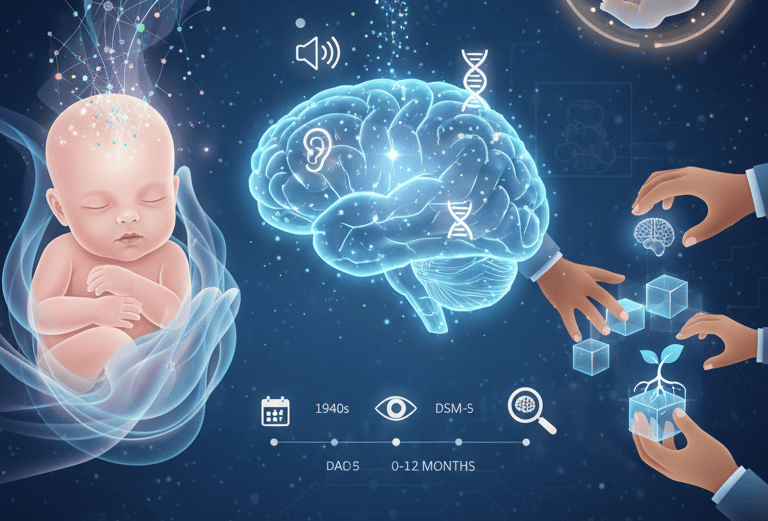
The text explores the possibility of detecting early signs of Autism Spectrum Disorder (ASD) in newborns, emphasizing that this is not about immediate diagnosis but about identifying subtle cues for timely support.
Historical Understanding of Autism
Early Misconceptions:
Historically, children with autistic traits were misdiagnosed with conditions like childhood schizophrenia or intellectual disabilities.
Pioneering Figures:
Leo Kanner: Described "early infantile autism" characterized by profound social difficulties and repetitive behaviors in the mid-20th century.
Hans Asperger: Identified similar patterns, often in children with preserved or exceptional language abilities.
The "Refrigerator Mother" Myth:
A debunked and harmful theory that blamed mothers for autism due to perceived emotional coldness. Science has unequivocally disproven this, establishing autism as a neurodevelopmental condition.
Evolution of DSM Criteria:
Initially, autism was barely acknowledged or grouped with schizophrenia.
Later, it was recognized as a distinct "pervasive developmental disorder."
The DSM-5 introduced the encompassing term "Autism Spectrum Disorder" (ASD), acknowledging its heterogeneity.
Current Understanding of Autism's Earliest Days
No Definitive Newborn Diagnosis:
A formal diagnosis of ASD is not possible in newborns. While ASD is believed to be present from birth, behavioral manifestations typically emerge between 18-24 months, with an average diagnosis age of 4.5 years.
Infant Brain Imaging Study (IBIS):
Research indicates distinct developmental pathways emerge in the first six months of life in infants later diagnosed with autism.
Etiology:
Autism is understood as a complex interplay of:
Genetic Predisposition: Hundreds of genes are believed to contribute to risk.
Environmental Influences: Factors like advanced parental age, certain prenatal exposures, and birth complications are implicated.
Early Indicators (0-12 Months)
Subtle behavioral patterns may emerge in the first year, requiring observation and discussion with a pediatrician:
Social Interaction:
Limited eye contact (as early as 2 months).
Lack of response to their own name.
Paucity of social smiles.
Apparent disinterest in faces or human interaction.
Reluctance to be held.
Communication:
Delays in babbling or cooing.
Limited repertoire of verbal expressions (absence of laughter or squealing).
Infrequent use of gestures (waving, pointing).
Sensory and Motor Patterns:
Unusual or repetitive motor patterns (hand flapping, rocking, stiffening).
Heightened sensitivity or indifference to sensory stimuli (sounds, touch, light).
Distress when routines are disrupted.
Developmental Milestones:
Delays in general milestones (rolling over, crawling).
Unusual movement patterns (toe-walking).
Prenatal Detection and Early Intervention
No Prenatal Tests:
Currently, no prenatal test (blood assay, ultrasound) can definitively predict autism before birth. Genetic conditions increasing ASD risk can be identified, but not autism itself.
Importance of Early Intervention:
The infant brain's plasticity allows for significant influence on development through targeted support during the sensitive early period, impacting language, social skills, and cognitive function.
Controversies and Challenges in Early Detection
Diagnostic Dilemmas:
Subtlety and Mimicry: Early signs can be subtle and mimic natural developmental variations, making differentiation difficult for general practitioners.
Misdiagnosis vs. Overdiagnosis: Balancing the identification of children needing intervention with avoiding undue anxiety and mislabeling. Some early diagnosed children may not meet criteria later, especially with prompt intervention.
Diagnostic Delays: Parents often face significant delays in receiving a formal diagnosis due to a lack of awareness or specialized expertise among general practitioners.
Causation Conundrums:
Vaccine Myth: The thoroughly debunked link between vaccines and autism persists, causing unnecessary fear.
Ethical Considerations in Early Intervention:
"Fixing" vs. "Supporting" Neurodiversity: Debate exists on whether interventions should aim to "normalize" behaviors (e.g., ABA's criticism for teaching masking) or empower autistic individuals to thrive authentically.
"Right to an Open Future": Concerns about shaping a child's developmental trajectory and imposing specific outcomes.
Stigma: Persistent societal stigma surrounding autism can make early discussions and diagnosis challenging for families.
Future of Newborn Autism Detection and Support
Brain Scans:
Studies like IBIS are using MRI and EEG to detect subtle brain development differences as early as 4-6 months. Newborn hearing screenings (ABR tests) also show potential as early risk indicators.
Smarter Screening Tools:
Development of instruments like the Autism Observation Scale for Infants (AOSI) to detect signs in babies as young as 6 months, aiming to accelerate diagnosis towards the first birthday.
Tailored, Parent-Powered Therapies:
Early Start Denver Model (ESDM): A play-based, relationship-focused therapy showing promise in improving cognitive function and reducing symptom severity.
Infant Start & iBASIS-VIPP: Parent-implemented, interaction-based therapies that empower parents to use daily routines to foster communication, social engagement, and early language.
Leveraging Neuroplasticity:
Emphasis on the brain's capacity to adapt and reorganize in early childhood to maximize potential and shape positive outcomes.
Conclusion
The increasing ability to detect early indicators of autism in newborns and infants is transforming the approach to this complex condition. Parents are encouraged to trust their instincts, stay informed, and utilize the evolving network of support and therapies to help children thrive. The future holds promise for earlier recognition, kinder interventions, and a more inclusive world for neurodiverse individuals.